|
| Bob Dylan: more relevant than ever to politicians on both sides of The Pond; "Don't criticise what you can't understand" |
 |
| The Kowloon Walled City before demolition in 1993; a one-stop-shop for opium, women and gambling, courtesy of local triads |
https://www.scmp.com/news/hong-kong/article/1191748/kowloon-walled-city-life-city-darkness
 |
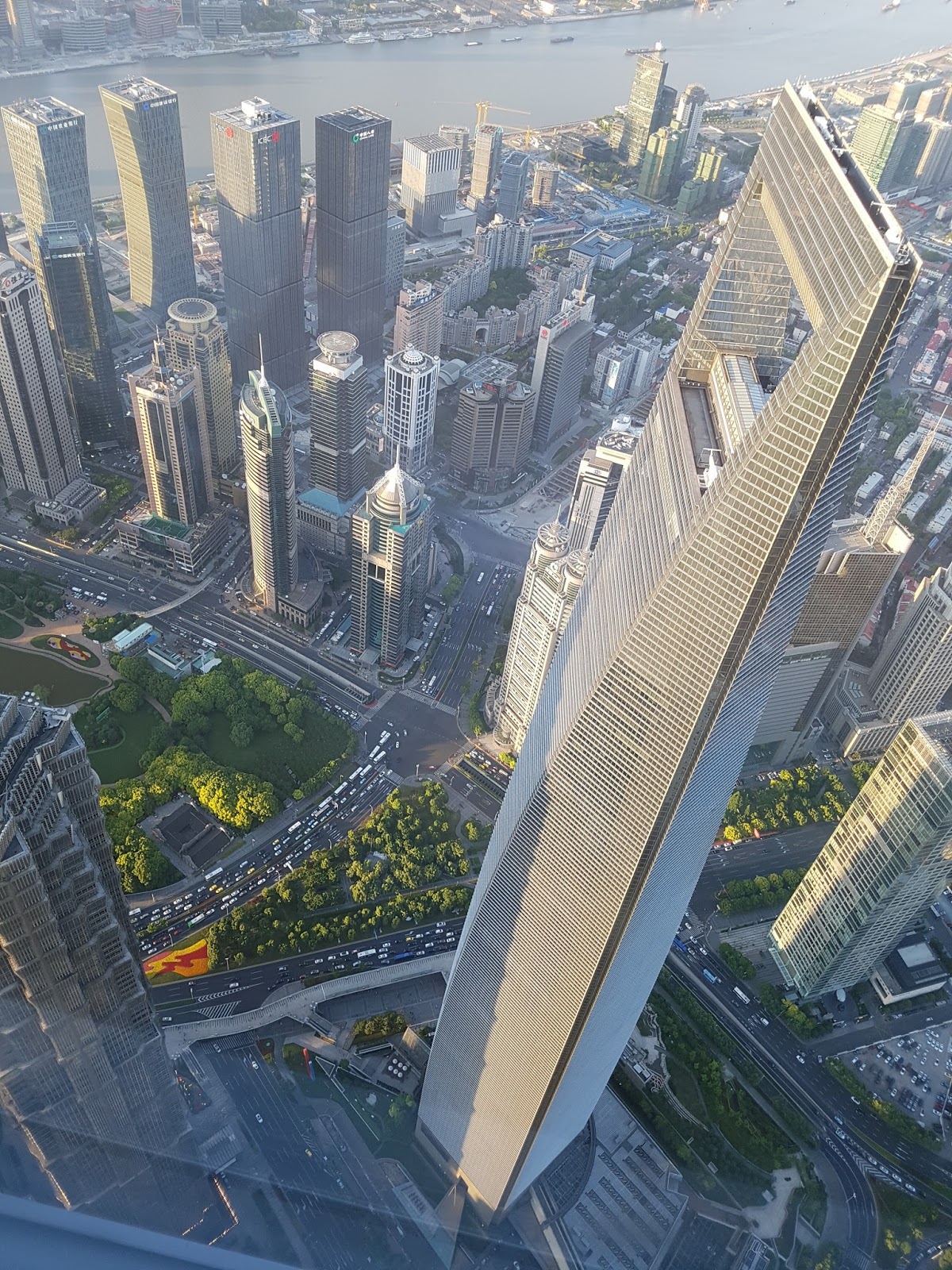
| Spielbergian skies over Hong Kong Island's famous northern waterfront - transformed by prestige architects
Anyone in primary school in the 70s will remember most of their toys were stamped with the familiar words 'Made in Hong Kong'. However by the early 80s, China's social reforms encouraged most of HK's manufacturing to move to the mainland, together with much of its male workforce.
While HK's departing industry was quickly replaced by service businesses such as finance and consulting, the departing male workers were quickly replaced by Hong Kongese women. Then suddenly family households needed cooks, cleaners and nannies (Domestic Helpers, DH) at home. This coincided neatly with the policy of the Philippines' wily president Marcos to export all of his problematic unemployed abroad. He was very successful and in the 20 years which followed, Indonesia, Thailand, Sri Lanka and Nepal also tried their luck with the same Marcos model.
|
 |
| View from Hong Kong over Victoria Harbour to Kowloon. Now a monument to finance and consulting. |
In Korea in 2015 it was estimated that 2.5% of families employed a Domestic Helper (DH). These are almost exclusively Chinese-Koreans since immigration laws restrict such work to ethnic Koreans only. This is designed to avoid the (perceived negative) impact of foreign cultural contamination in Korean homes. The policy not only runs contrary to foreign teachers being allowed to teach English to school children but also the fact that many parents consider an English-speaking nanny as a learning advantage for their children. However, as the law stands, it is taken very seriously by Immigration, as Korean Air heiress Heather Cho found out in 2018.
 |
| Heather Cho, celebrated for commandeering a departing plane on the tarmac at JFK airport because she was served macadamia nuts without a silver tray, this time answering allegations that she circumvented immigration law by hiring Filipino Domestic Helpers as 'Korean Air trainees' |
http://m.koreaherald.com/view.php?ud=20180617000217#cb
In a total Korean population of 50m people, estimates are that 30,000 to 80,000 people work as DHs, typically earning just under US$1,000 per month.
By comparison, up to 33% of Hong Kongese families are estimated to hire DHs, amounting to 350,000 people or 5% of a total HK population of 7.5m. DHs are almost all female, split 50:50 Filipino:Indonesian, mostly in the age range 20 to 45 and typically earning US$500 per month.
In Hong Kong, DHs are legally obliged to live with their employers. Their day starts very early as they prepare breakfast for the family, get children washed and dressed for school and quite possibly deliver them to school also. The day is then filled with food shopping, cooking, washing, cleaning and then collecting children, feeding them, washing them and getting them to bed before the return of the parent(s).
There is a lot to do so it is a long day, often finishing after 9pm, which explains why most DHs are not highly visible Monday to Saturday. Sunday however is the customary day off, when many DHs go to worship before collecting in the city's parks and open spaces to share food with friends, make video calls to the family back home and to fall asleep in the shade to the comforting background chatter of their native tongue.
 |
| Road closed for dancing in the street; a typical Sunday in Central in HK Domestic Helpers set up impromptu food and dance parties in the city's open spaces. |
 |
| Noodles and kick-boxing make for a relaxing afternoon |
 |
| 'Pretty maids all in a row'; Sunday in the park after worship; headscarved Indonesians to the left and Filipinas to the right. |
While a foreigner in Korea still usually finds themselves the only non-Korean on the subway, in the supermarket or at the bar, in HK the ethnic mix could not be more complete. There are people from every corner of the world attracted by the combination of high salaries, low taxation and lenient requirements for work permits and residency. Of course in mid-summer this still feels like miserable compensation for the infernal heat and oppressive humidity. To adapt an old line from General Sheridan; "If I owned Hong Kong and Hell, I'd rent out Hong Kong and live in Hell."
https://en.wikiquote.org/wiki/Philip_Sheridan
Permanent residency can be acquired after 7 years of living legally in Hong Kong. However, controversially, this excludes people working as Domestic Helpers. Some have mounted legal challenges to this but so far these failed.
https://en.m.wikipedia.org/wiki/Vallejos_v_Commissioner_of_Registration
Although English serves to connect most people in HK, it is interesting to note that a common language does not in itself deliver real social integration. On Sundays it is quite normal to see a group of Filipinas having an impromptu zumba under some trees while head-scarved Indonesians sit reading and chatting in a separate group nearby. Meanwhile two blocks away there will be English, Irish, Aussies and Yanks downing beers and following their own national sports in their separate home-styled bars. This shows that social integration occurs between people with shared histories, experiences, values and beliefs; it requires much more than simply speaking a common language.
 |
| Braving a summer squall in Taymar Park: an open air screening of The Rocky Horror Picture Show (1975) attracts people of all nationalities to come and get wet together |
If there is any ethnic-unifying culture in Hong Kong then this is most visibly simply money. The striking number of jewelry shops, even in the most bland malls and socially humble residential areas shows a pre-occupation with bling; see and be seen, get it and show it to everyone on My-Life-Is-Better-Than-Yours.com
 |
| A Lotus get-away car for the groom; cheap and tacky but unusual (just like his boots and haircut) |
Anyone taking the popular, open-topped city tour bus ride will have seen The Pawn as they pass all the famous land marks of Hong Kong. The building dates from 1881, was formerly a pawn shop and was since reinvented as an upmarket bar and restaurant. Here you can take green tea on the balcony while peering down your nose at the great unwashed for just US$14; the same list price as the Guinness. Bottles of spirits are priced at 5 times their respective duty free prices, which puts a bottle of champagne at about US$350. At such places it is unremarkable to see a young couple, barely in their 20s, order a bottle of Moet, drink one glass each while waiting for friends and then leave the rest of the bottle as they move onto their next venue.
 |
| The Pawn on Johnston Rd, Wanchai |
 |
| Hong Kong's WanChai; a place where the high-life and low-life rub shoulders. If you drop US$300,000 you can walk out with a McLaren on 20" wheels. If you drop US$300 you can walk out with an hour's worth of intimate company on 3" heels. Good quality rubber is essential for both options. |
 |
| A six-decked yacht named 'Diamonds are Forever' sits idle month after month in a marina overlooked by the Gold Coast Hotel |
 |
| Proving that absurd advertising does not detract from its success. The current must-have item for HK's male and female professionals alike - chunky gent's watches by Omega, or at least, strikingly good imitations thereof. |
As a social model, HK demonstrates how different cultures can live, drive and survive together without being assimilated into the culture of the host country. A healthy mutual respect, a live-and-let-live attitude and a common observance of the law can be enough. This should reassure those Koreans who are increasingly panicked by the popular media about the rising numbers of foreigners in Korea and the potential erosion of Korean culture.